The Space Force Is Betting on Multi-Sensor Architectures. Here’s How the Data Layer Can Keep Up.
September 25, 2026
Multi-sensor SB-AMTI strategy highlights a growing data challenge
.png)
September 25, 2026
The U.S. Space Force is making an interesting bet on the future of sensing: don't rely on a single sensor, technology, or vendor.
Its Space-Based Airborne Moving Target Indicator (SB-AMTI) program is being developed as a system-of-systems combining space-based sensing, ground processing, communications, and AI. As the Space Force explains in its overview of how SB-AMTI is changing airborne target tracking, the goal is to bring multiple capabilities together to detect and track airborne targets.
More recently, Space Systems Command awarded three agreements totaling $615 million to accelerate SB-AMTI capabilities, with an explicit focus on vendor diversity and multiple sensing technologies and disciplines.
The reasoning makes sense. Different sensing phenomenologies offer different advantages depending on environmental conditions, geography, and the mission. No single sensor is ideal for every scenario.
But there's another side to a multi-sensor strategy: Every additional sensor creates another stream of data that has to work with everything else.
And as sensor architectures become more diverse, the data architecture underneath them has to keep up.
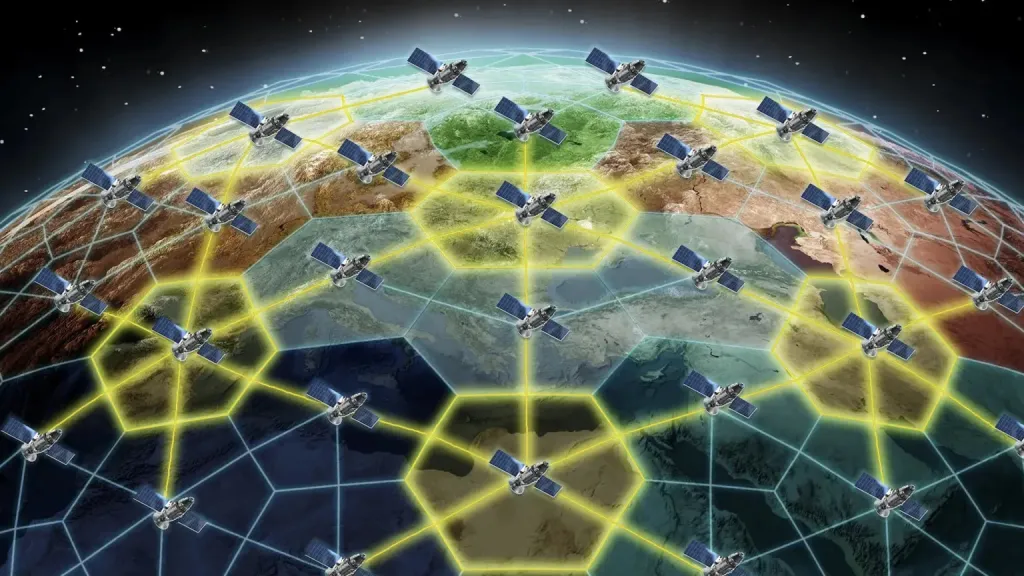
Combining radar, RF, EO/IR, telemetry, and other data sources can provide a more complete operational picture than any individual source can provide alone.
But each new sensor can also introduce different:
This creates an interesting engineering challenge. An organization can build a highly diverse sensor architecture while inadvertently creating an increasingly fragmented software architecture underneath it.
If every new sensor requires a custom ingestion pipeline, processing workflow, storage architecture, and downstream integration, adding capabilities becomes progressively more difficult.
The real promise of multi-sensor architectures isn't simply having more sensors. It's being able to use their data together.
A radar system may provide one view of an environment while RF or EO/IR provides another. Individually, those data sources have value. But when they can be correlated, they can contribute to a much richer operational picture.
That means the architecture underneath the sensors has a significant job to do.
It needs to ingest data from different sources while preserving timing relationships. It may need to normalize or transform different formats, record synchronized streams, and distribute information to analytics, visualization, AI, or other mission applications.
At Necara Solutions, we think about the data-processing layer as the connective tissue between sensors and the applications that ultimately need their data.
Rather than engineering an entirely new pipeline every time a sensor, payload, vendor, or mission changes, teams can begin with a reusable data-processing foundation and adapt it to each deployment.
That foundation should make it easier to:
Ingest heterogeneous data. Different sensors shouldn't require completely separate architectures simply because they generate different formats or use different interfaces.
Preserve timing and synchronization. When multiple sensors observe the same environment, maintaining accurate timing relationships between their data streams becomes critical for downstream correlation and analysis.
Normalize data for downstream systems. Analytics tools, visualization platforms, mission applications, and AI models shouldn't necessarily need to understand the unique interface of every upstream sensor.
Record data with its context. Synchronized sensor streams and associated metadata can be captured for playback, testing, analysis, and mission reconstruction.
Process data where the mission requires it. Depending on latency, bandwidth, compute resources, and mission requirements, processing may happen near the sensor, onboard a spacecraft, at another edge location, on the ground, or across several environments.
Add capabilities without starting over. A new sensor should become another component within the architecture, not the beginning of another custom software program.
.png)
There's another important aspect of the Space Force's SB-AMTI approach: vendor diversity.
In announcing the new awards, Space Systems Command said its strategy is designed to mature multiple sensing technologies and disciplines while broadening the vendor base.
From a data architecture perspective, that's important.
If sensors, vendors, and technologies are expected to change over the life of a system, the architecture connecting them can't be overly dependent on any one component.
Otherwise, adding or replacing a sensor can trigger changes throughout the rest of the system.
An adaptable data layer creates separation between the systems generating data and the applications consuming it. That gives teams more flexibility to introduce new sensors, processing capabilities, or vendors without redesigning the entire data pipeline around them.
If the sensor strategy is designed to change, the data architecture needs to be designed for change too.
The challenge isn't unique to SB-AMTI.
Similar requirements exist anywhere organizations need to bring together information from multiple sources: ISR, space domain awareness, Earth observation, autonomous systems, test environments, ground systems, and multi-mission satellite architectures.
And the challenge grows as architectures expand beyond one mission.
One deployment might use three sensors. The next might use five, introduce different hardware, or combine entirely different sensing phenomenologies.
If the software foundation was designed specifically around the first configuration, much of that integration work may need to happen again.
A mission-adaptable architecture takes a different approach: build the common data-processing capabilities once, then configure and extend them as sensors and missions change.
The Space Force's SB-AMTI strategy highlights a broader shift in how complex sensing systems are being designed.
More sensors. More phenomenologies. More vendors. More distributed processing. More AI.
Each can add capability.
But they also increase the importance of what connects everything together.
At Necara, our view is simple:
The more diverse the sensor architecture becomes, the more important a common, adaptable data backbone becomes.
That's part of the philosophy behind Osteo DPE™, Necara's reusable data-processing layer for ingesting, transforming, synchronizing, recording, and distributing diverse data streams across edge, onboard, and ground environments.
Instead of engineering another pipeline every time a sensor or mission changes, teams can focus their engineering resources on the capabilities that actually differentiate the mission.
Because the next generation of sensing isn't going to depend on one sensor.
The data architecture underneath it shouldn't assume that it will.